
Blog by Stu Phillips
Bulk Tobacco Detection: Testing Dogs Under Real Operational Conditions
𝗕𝘂𝗹𝗸 𝗧𝗼𝗯𝗮𝗰𝗰𝗼 𝗗𝗲𝘁𝗲𝗰𝘁𝗶𝗼𝗻: 𝗧𝗲𝘀𝘁𝗶𝗻𝗴 𝗗𝗼𝗴𝘀 𝗨𝗻𝗱𝗲𝗿 𝗥𝗲𝗮𝗹 𝗢𝗽𝗲𝗿𝗮𝘁𝗶𝗼𝗻𝗮𝗹 𝗖𝗼𝗻𝗱𝗶𝘁𝗶𝗼𝗻𝘀
𝗜𝗻𝘁𝗿𝗼𝗱𝘂𝗰𝘁𝗶𝗼𝗻
Last night, I had the rare opportunity to observe something very special: how Customs tobacco detection dogs react when faced with a bulk load of their target odour.
Training a detection dog to locate and alert to a specific odour is always a challenge. That challenge becomes even greater when the operational reality you are preparing for involves large-scale quantities — quantities that you often cannot replicate during training. While we can routinely train dogs using suitcases, small parcels, or concealed loads, the question always remains: how will a detection dog react when confronted with an entire lorry load?
In Moldova, the Customs K9 Unit trains its dogs to detect multiple target odours, including tobacco, drugs, and cash. As with many Customs units worldwide, they maintain training samples in a range of weights and concealment methods. However, access to true bulk quantities — particularly of tobacco — is rare. And by bulk, I mean a full shipment: an entire lorry packed with cigarettes.
Operationally, the goal is for Moldovan tobacco detection dogs to detect significant quantities of smuggled tobacco at border crossings — those large, organised loads intended for illicit distribution. But when your training resources typically involve suitcases or small container loads, there is always a concern: how will the same dog respond to a truly massive odour source?
Last night, we had the chance to find out.
During a live training operation at a Border Control Point (BCP), we were given access to a real lorry carrying a legitimate shipment of cigarettes — 37 pallets of tobacco products, stacked and loaded exactly as they would be during a genuine smuggling operation.
𝗥𝗲𝗮𝗹-𝗧𝗶𝗺𝗲 𝗥𝗲𝗮𝗰𝘁𝗶𝗼𝗻𝘀: 𝗔 𝗧𝗲𝘀𝘁 𝗳𝗼𝗿 𝗧𝗵𝗿𝗲𝗲 𝗗𝗲𝘁𝗲𝗰𝘁𝗶𝗼𝗻 𝗗𝗼𝗴𝘀
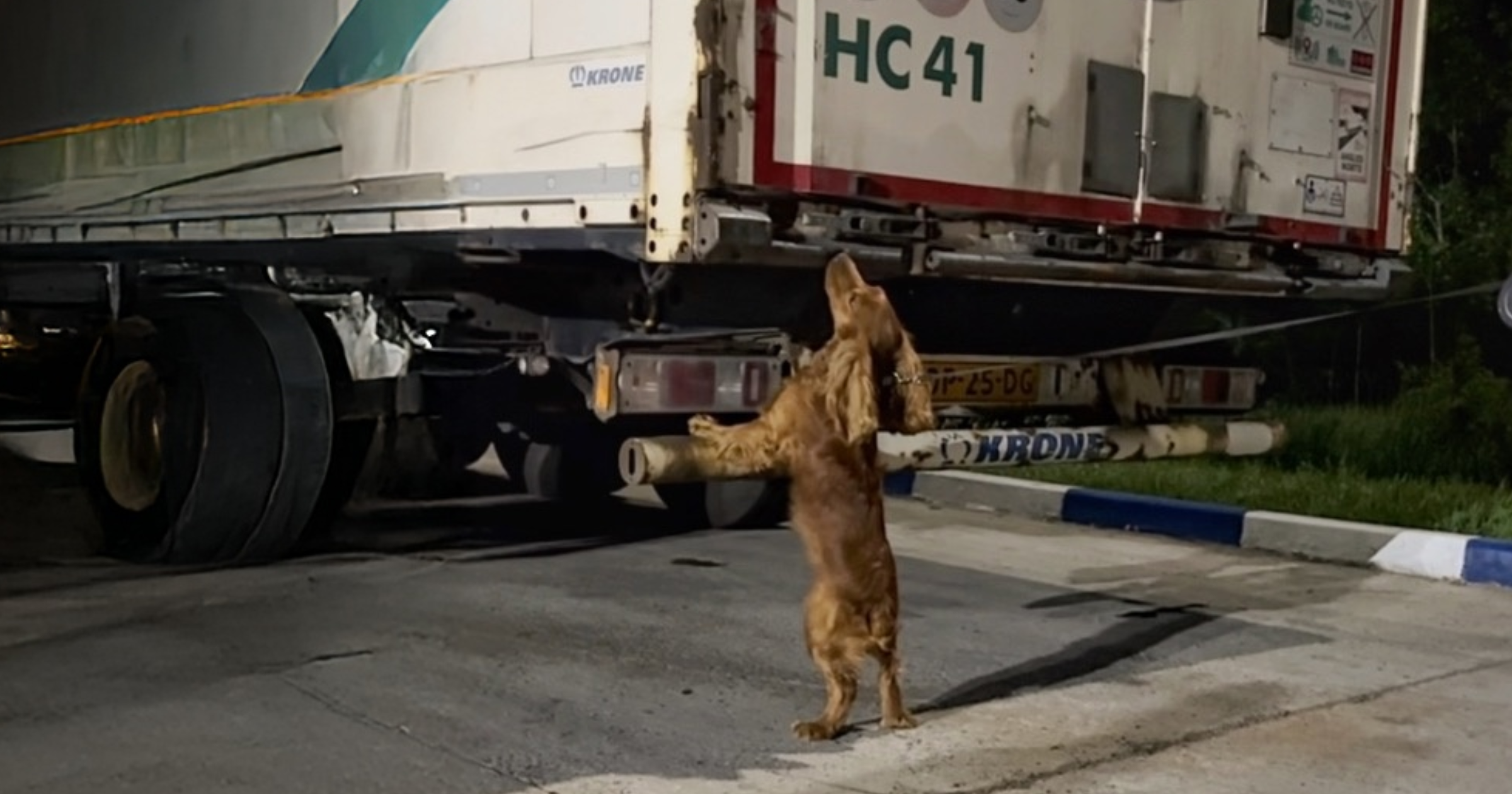
For this exercise, we worked three very different dogs: a Dutch Herder, a German Shepherd, and a Cocker Spaniel.
The exercise took place in a live operational environment at a busy Border Control Point. Moving traffic, background noise, personnel, and even stray dogs created a truly realistic operational atmosphere.
Adding further to the realism, the handlers of the Dutch Herder and German Shepherd were not informed in advance that this was a training exercise. Prior to working the target lorry, they searched two negative trucks and trailers, helping ensure all indications were genuine.
𝗗𝘂𝘁𝗰𝗵 𝗛𝗲𝗿𝗱𝗲𝗿
The Dutch Herder was the first dog deployed.
Worked off-lead, the Herder displayed high hunting drive and focused independent search behaviour from the outset.
Reaching the rear of the trailer, the Herder showed a clear change of behaviour, moving underneath to work the scent pools created by the bulk load. After several minutes of problem-solving, the Herder emerged, intensified its sniffing at the rear doors, and pressed its nose tightly against the door seam — lifting its front legs onto the trailer.
The dog then began barking at the handler as a trained final response. Upon confirmation, the dog was rewarded with a ball.
The Herder demonstrated environmental confidence, independent problem-solving, and clear communication — essential traits for operational detection work.
𝗚𝗲𝗿𝗺𝗮𝗻 𝗦𝗵𝗲𝗽𝗵𝗲𝗿𝗱
The German Shepherd was worked on the lead, with the handler guiding the search systematically.
The dog quickly showed a change of behaviour along the side of the trailer, and behaviour intensified at the rear. It moved underneath the trailer, working the scent methodically.
After several minutes of deep scenting, the Shepherd emerged and delivered a textbook final freeze indication — nose pressed against the seam, two front legs up on the trailer doors, hind legs on the ground.
This indication showed a strong commitment to source even with multiple live distractions present.
𝗖𝗼𝗰𝗸𝗲𝗿 𝗦𝗽𝗮𝗻𝗶𝗲𝗹
The Cocker Spaniel was worked on a flexi-lead, allowing freedom to search.
Despite being smaller, the Spaniel showed excellent drive and persistence. Working one side of the trailer, it showed a clear change of behaviour and, on reaching the rear, stood up on its back legs to reach the seam.
The Spaniel then delivered a perfect textbook freeze indication — nose pressed into the seam, front paws lightly resting on the trailer, rear legs grounded. The indication was absolutely perfect and undeniable.
𝗞𝗲𝘆 𝗢𝗯𝘀𝗲𝗿𝘃𝗮𝘁𝗶𝗼𝗻𝘀 𝗮𝗻𝗱 𝗟𝗲𝘀𝘀𝗼𝗻𝘀 𝗟𝗲𝗮𝗿𝗻𝗲𝗱
Key Observations:
- Bulk odour dispersal created complex scent pools around the trailer.
- Clear changes of behaviour were observed across all three dogs.
- Strong problem-solving was maintained despite operational distractions.
- Physical commitment to source was evident in the Dutch Herder and German Shepherd.
- Handlers successfully observed changes of behaviour (COB) en route to TFR — crucial operationally, as COB alone could justify deeper search actions in live conditions.
Lessons Learned:
- Prepare dogs for complexity, not just simplicity.
- Allow independent problem-solving without over-handling.
- Small dogs, if motivated, can work large scent problems successfully.
- Lead handling must allow freedom without loss of control.
- Real-world environments must form part of training to build true operational readiness.
- Handler ability to recognise COB is critical in real operational deployments.
𝗖𝗹𝗼𝘀𝗶𝗻𝗴 𝗧𝗵𝗼𝘂𝗴𝗵𝘁𝘀
This was a rare and valuable exercise — testing both dogs and handlers under live operational conditions with a full load of genuine target odour.
The performances observed proved that detection dogs, when properly trained, can scale their skills from training aids to large-scale reality. It also highlighted the crucial importance of handlers reading not just final responses but the vital early stages of change of behaviour.
Training exercises like this build operational confidence, readiness, and ultimately support successful interdictions.
Customer Feedback
STU PHILLIPS K9
Get in Touch Today
Trusted worldwide for operational credibility and instructional excellence, Stuart Phillips K9 delivers detection dogs, training, and consultancy that stand up in the real world. Contact us today to discuss your requirements and see how we can support your mission.